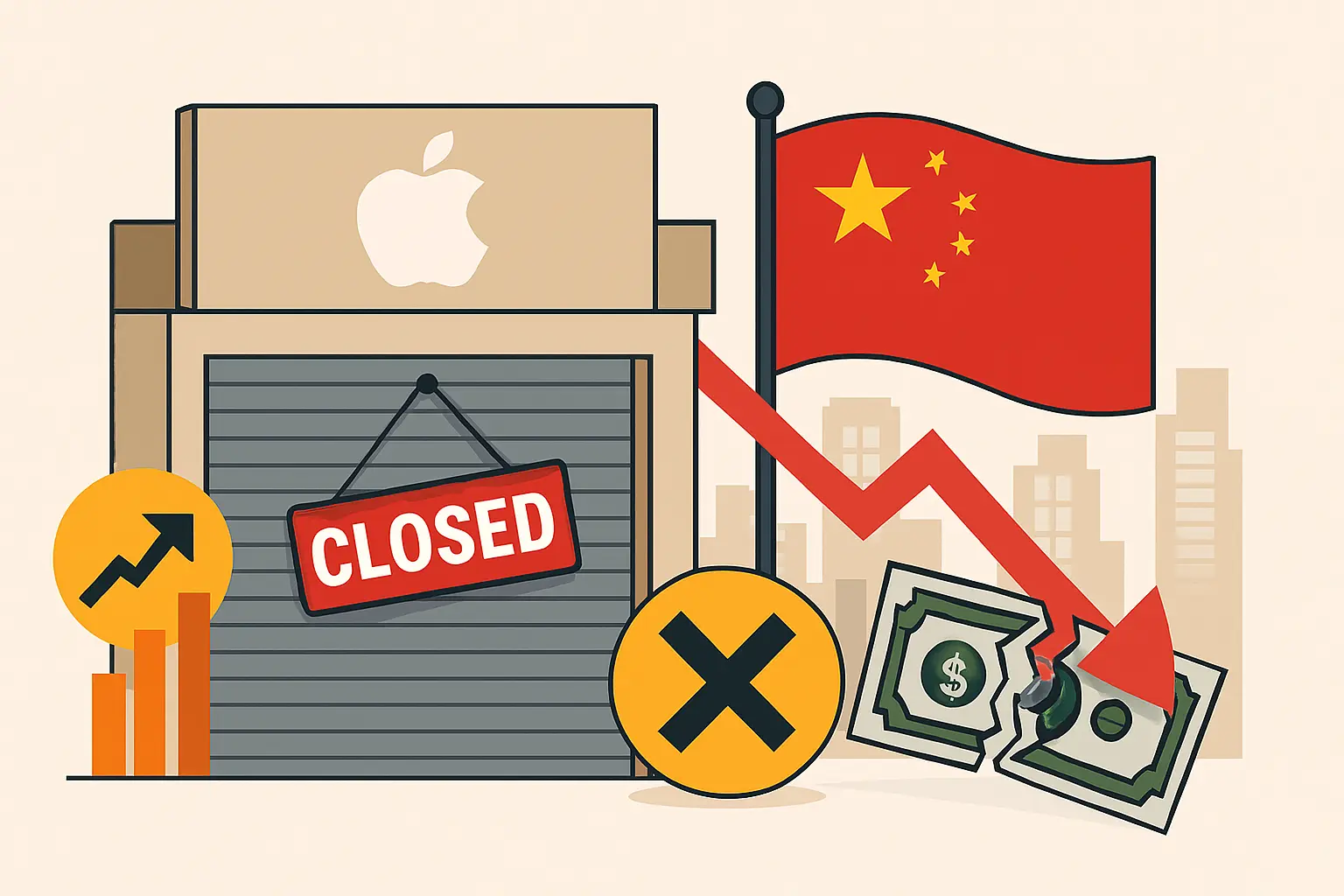
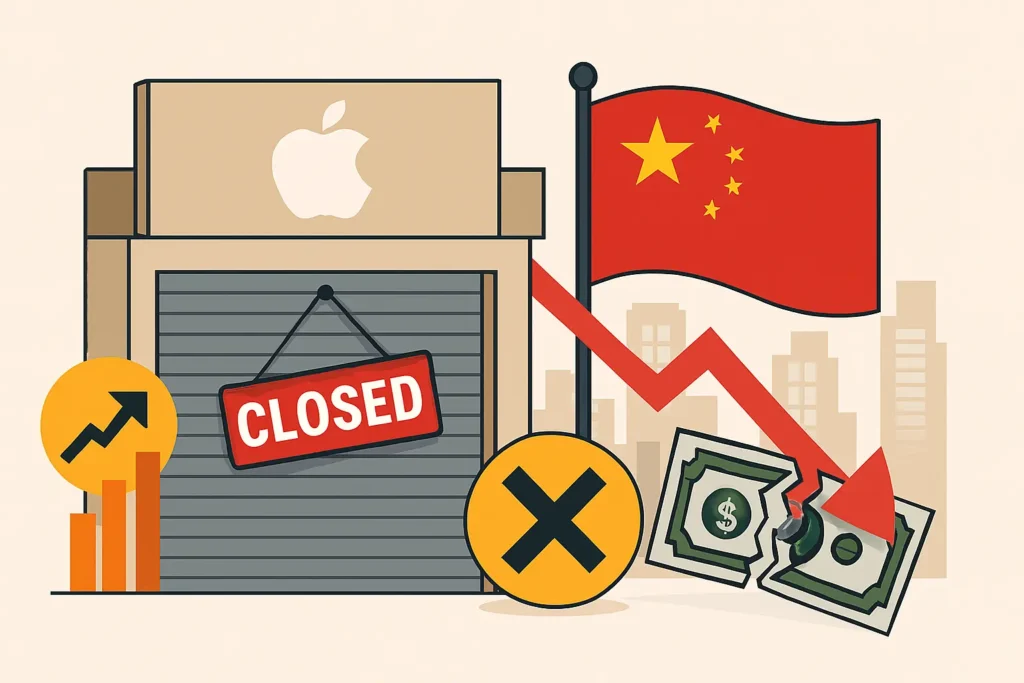
In a move that has sparked industry-wide attention, Apple has announced it will close its Dalian retail store located in the Parkland Mall on August 9. This decision breaks new ground for the tech powerhouse, marking the first-ever closure of a physical Apple Store in mainland China — a country long considered a cornerstone of the company’s international strategy.
The closure comes not from weakening brand strength, but from changing tides in local retail dynamics. Parkland Mall, now rebranded as Intime City under new management, has seen a string of tenant exits in recent months, pointing to broader structural challenges in China’s brick-and-mortar sector.
Adapting to an Evolving Market
Apple’s move underscores a larger shift in how international brands are approaching retail in China. Instead of doubling down on underperforming locations, companies are becoming increasingly selective — focusing on premium urban hubs and online channels where digital engagement is strongest.
Analysts suggest this recalibration signals a maturing market where brand presence alone is no longer enough. Success now depends on adapting to shifting consumer behaviors, economic headwinds, and growing digital-first preferences.
China’s Retail Pulse: Slowing but Not Silent
Consumer sentiment in China remains cautious. After a post-pandemic rebound, the economy is now grappling with low inflation, falling home prices, and underwhelming retail sales. The once-explosive demand for premium tech has softened, particularly in second-tier cities where foot traffic and purchasing power have both dipped.
Yet, this slowdown hasn’t extinguished competition — it’s intensified it. Brands are being forced to innovate, rethink their strategies, and compete harder for consumer loyalty.
Apple Faces a Fiercer Playing Field
Despite its global stature, Apple is now operating in a transformed Chinese tech landscape. Consumers are savvier, more price-conscious, and increasingly drawn to local brands that offer competitive features at lower costs. While Apple maintains strong brand equity, it is contending with a market that no longer favors legacy status — but rewards adaptability, ecosystem value, and affordability.
Rather than a retreat, the Dalian store’s closure signals Apple’s shift toward optimizing its retail footprint for quality over quantity — with more focus on high-traffic metro areas and seamless digital integration.
Fintech on the Rise: LendingClub Taps into Mobile Momentum
Meanwhile, across the Pacific, a different kind of tech evolution is unfolding. U.S.-based digital lender LendingClub is riding a wave of success through its mobile-first strategy. Its new products, LevelUp Checking and LevelUp Savings, are designed to reward smart financial behavior — and the results are promising.
The company has seen a dramatic rise in user activity, with new accounts and app engagement metrics sharply increasing since the rollout. Customers are earning incentives for timely payments and consistent savings, encouraging deeper relationships and long-term loyalty.
CEO Scott Sanborn emphasized that today’s financial users want more than just convenience — they want value. “It’s about creating experiences that give customers a reason to engage regularly, not occasionally,” he said during the company’s earnings call.
What It All Means
Apple’s Dalian exit and LendingClub’s mobile surge may seem worlds apart — but both reveal the same truth: today’s consumers demand relevance, not just presence. Whether it’s the smartphone in their hand or the banking app on their screen, loyalty is earned through innovation, responsiveness, and the ability to meet people where they are.
For companies hoping to thrive in the new normal — in China or anywhere—the lesson is clear: listen to the market, adapt with agility, and never take attention for granted.