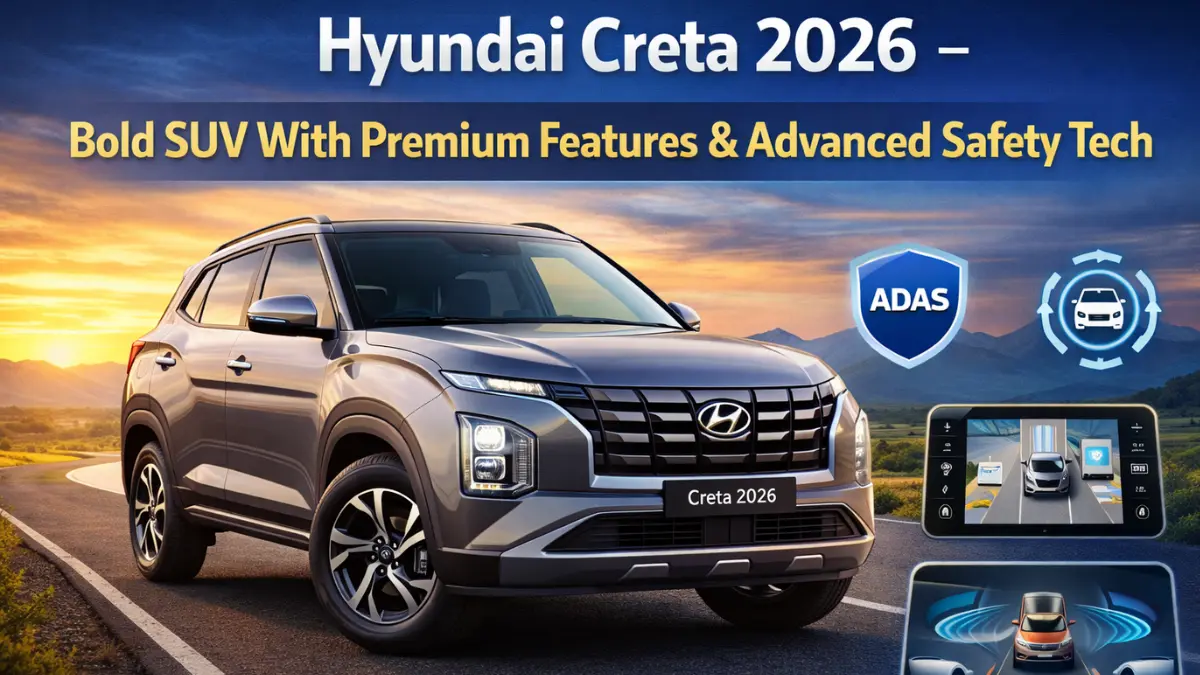
If you’ve been following the SUV scene in India, you already know the Creta is kind of a big deal. The 2026 version just launched, and honestly, Hyundai seems to have listened to what buyers actually want. It’s got the looks, the tech, and those little touches that make daily driving less of a chore. Let me walk you through what’s changed and whether it’s worth your attention.
They’ve Really Worked on the Design
First impressions matter, right? The new Creta definitely catches your eye. Hyundai’s gone with this parametric grille thing up front – sounds fancy, but basically it’s a bold pattern that makes the SUV look more premium than before. The LED headlights are sharper, and there’s this overall sense that they wanted it to stand out in a parking lot.
What I appreciate is how they’ve managed the proportions. It’s not trying too hard to look aggressive like some SUVs that end up looking cartoonish. The side profile has these neat character lines that give it some muscle without overdoing it. They’ve added new paint options too, including some dual-tone combinations that younger buyers will probably love.
The back end now has connected tail lights – you know, that light bar stretching across the width. It’s become pretty common these days, but here it actually looks like it belongs rather than being slapped on as an afterthought. The overall package feels cohesive, which matters when you’re spending this kind of money.
Engine Choices That Actually Make Sense
Here’s where things get practical. Hyundai’s offering the Creta with three engine options, and each one serves a different type of buyer. There’s the standard 1.5-liter petrol that’s perfect if you mostly drive in the city and want decent fuel economy. Nothing crazy powerful, but it gets the job done without drama.
Then there’s the diesel, which honestly still makes sense if you do a lot of highway miles or have a long daily commute. The torque down low means you’re not constantly shifting gears in traffic, and the mileage is genuinely good. I know diesel’s becoming less popular, but for certain use cases, it’s still the smart choice.
The turbo-petrol is the fun option. It’s got more punch when you need to overtake or merge onto highways. Feels more modern somehow, probably because of how smoothly the power comes in. If you’re someone who enjoys driving rather than just tolerating it, this is the one to test drive.
Transmission options are pretty comprehensive too. You’ve got manuals if you’re old school or want to save some money. The automatics include a torque converter, a CVT, and even a dual-clutch unit depending on which engine you pick. Each has its own character – the DCT is quicker, the CVT is smoother, and the torque converter is the most relaxed for city use.
What really impressed me is how refined everything feels. Hyundai’s clearly worked on reducing vibrations and noise. You’re not getting that typical budget SUV harshness anymore. It genuinely feels like they’ve spent time making the engines pleasant to live with every day.
The Interior is Where They’ve Splurged
Open the door and you immediately notice they’ve upped their game inside. The materials feel nicer, the fit and finish is tight, and there’s this sense of quality that wasn’t quite there in older versions. The dashboard layout is clean without being boring.
That big touchscreen in the center? It’s actually useful, not just there for show. The interface is intuitive enough that you won’t need to read a manual to figure out basic stuff. Wireless Android Auto and Apple CarPlay work smoothly, which is great because nobody wants to deal with cables every time they get in the car.
The panoramic sunroof is a crowd-pleaser. Sure, it doesn’t open fully, but it makes the cabin feel way more spacious and airy. On a nice day, it genuinely adds to the driving experience. The ventilated seats are a lifesaver in summer – if you’ve never had them, you don’t know what you’re missing when it’s 40 degrees outside.
Digital instrument cluster is customizable and shows everything clearly. No squinting to read important info while driving. The ambient lighting isn’t just one color either; you can change it to match your mood or just turn it off if it’s not your thing.
Sound system is surprisingly good. Hyundai’s put in a decent number of speakers, and while it won’t replace a high-end aftermarket setup, it’s more than adequate for most people. Audio quality during calls through Bluetooth is clear too, which matters if you take a lot of work calls while driving.
Safety Stuff They’ve Actually Included
This is important, so pay attention. Six airbags are now standard across all variants. That’s huge because many manufacturers still skimp on base models. You’re getting proper protection regardless of which variant you choose.
The ADAS features are where things get modern. Forward collision warning actually works – it’ll beep if you’re about to rear-end someone. The automatic emergency braking has intervened during tests, though hopefully you’ll never need it in real life. Lane keeping assist is there, though honestly, it can be a bit annoying on poorly marked Indian roads. You can turn it off if it bothers you.
Blind spot monitoring is genuinely useful, especially in chaotic city traffic where bikes appear out of nowhere. The little light in the mirror has saved me from unsafe lane changes more than once. Rear parking sensors and camera are standard fare now, but the 360-degree camera system on higher variants is really helpful in tight parking situations.
Hill start assist prevents that scary rollback when you’re stopped on an incline. Traction control and stability control work quietly in the background, keeping things stable when roads are wet or you need to make a sudden maneuver.
How It Actually Drives
Let’s talk about the everyday experience. The driving position is spot-on – you sit high enough to see over traffic, but it’s not SUV-tall where you feel disconnected from the road. Visibility is good all around, which makes city driving less stressful.
The suspension setup is probably the biggest win here. Indian roads are brutal, and the Creta just soaks up the punishment. Potholes, speed breakers, broken patches – it handles them all without crashing through. Yet it doesn’t feel floaty on the highway. There’s a balance here that Hyundai’s nailed.
Steering is light enough for parking but weights up nicely at speed. It’s not going to thrill driving enthusiasts, but that’s not what this car is about. It’s accurate, easy to use, and doesn’t require constant corrections on straight roads.
Noise insulation is really impressive. Road noise is well suppressed, wind noise only becomes noticeable at higher speeds, and engine noise is muted unless you’re really pushing it. You can have normal conversations without raising your voice, and music sounds good without cranking up the volume.
The cabin stays comfortable even on long drives. AC is powerful enough for our summers, and the vents are positioned well so everyone gets adequate cooling. Rear passengers aren’t forgotten – they get their own vents and enough legroom that adults won’t complain on highway trips.
Living With It Day-to-Day
Boot space is generous. I’ve fit a week’s worth of groceries plus other stuff without playing Tetris. If you fold the rear seats, you can haul surprisingly large items. The loading height isn’t too high, so you’re not doing deadlifts to get heavy bags in.
Ground clearance is adequate for Indian conditions. I’ve taken it on some pretty rough roads, and it hasn’t scraped anywhere it shouldn’t. Speed breakers are no problem, and even broken roads with deep ruts don’t cause issues.
Storage spaces are thoughtfully placed. Big door pockets, center console that actually holds things, cup holders that fit normal-sized bottles, and those little cubbies here and there for phones, sunglasses, and random stuff. It’s the kind of practical thinking that makes daily use pleasant.
Fuel efficiency in real-world conditions is decent. The petrol gives somewhere around 12-14 kmpl in mixed driving, diesel pushes 16-18, and the turbo-petrol sits around 11-13 depending on how you drive. Not segment-leading, but reasonable for an SUV this size.
Who’s This Really For?
Hyundai’s clearly targeting families here. If you’ve got kids, elderly parents, or just like the idea of having space and comfort, the Creta makes sense. It’s also great for young professionals who want something that looks good but won’t break the bank or be a pain to maintain.
The brand reliability matters too. Hyundai’s service network is everywhere, parts are reasonably priced, and you generally don’t hear horror stories about things going wrong. That peace of mind counts for a lot when you’re making a significant purchase.
Price-wise, it’s positioned right in the sweet spot. Not cheap, but you’re getting a lot of equipment for your money. When you compare features across variants, the mid-spec versions seem to offer the best value. Top variants have every bell and whistle, but you’ll need to decide if those extras are worth the premium.
Resale value holds up well too. Cretas are in demand in the used market, which means when you eventually upgrade, you’ll get decent money back. That’s something worth considering in the total ownership cost.
My Take on It
Look, the Creta isn’t perfect. Some rivals might have slightly better handling or more powerful engines. But what Hyundai’s done here is create a really well-rounded package. It does most things well without any glaring weaknesses.
If you want an SUV that’s comfortable, loaded with features, safe, and won’t give you headaches, the 2026 Creta deserves a serious look. It’s the kind of vehicle that might not excite you on paper but wins you over when you actually live with it. Sometimes that’s exactly what you need – something reliable that just works, day in and day out.
Also read:
Royal Enfield Meteor 350 – Smooth Cruiser With Modern Tech & Comfortable Ride