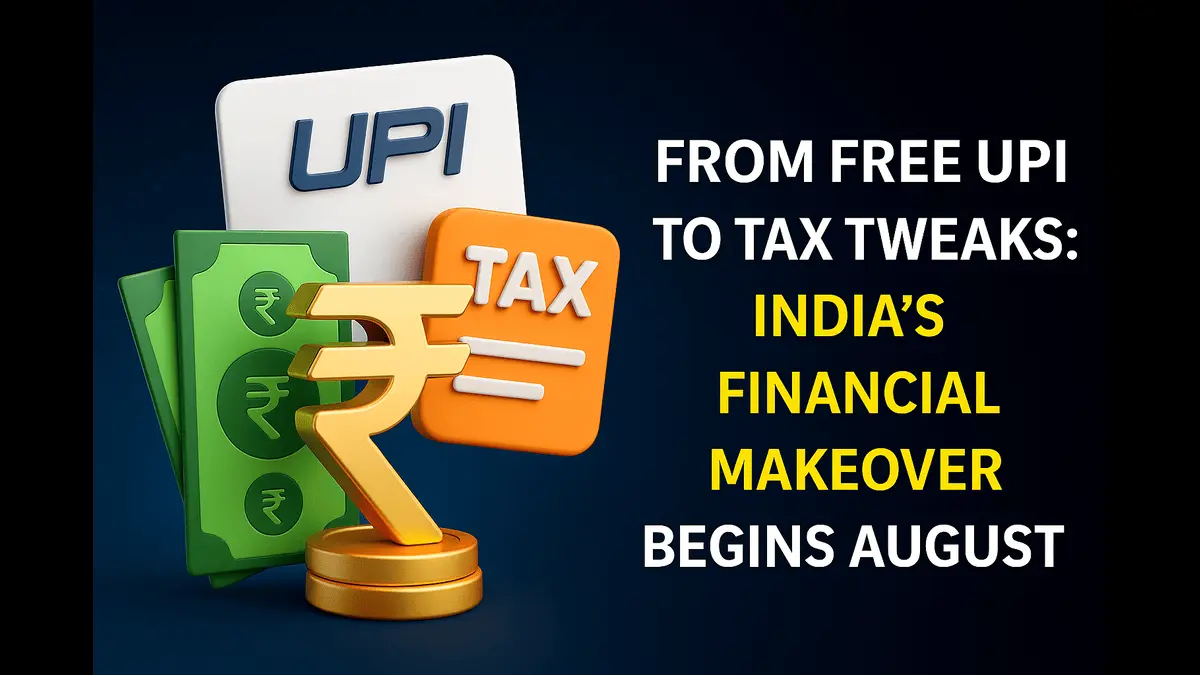
As August 1, 2025, ushers in sweeping financial reforms across India—from UPI transaction limits and LPG price revisions to restructured credit card perks—the average citizen’s wallet may feel lighter or, with smart planning, a bit more fortified. These changes aren’t just regulatory fine-tuning—they signal a shift in how the nation wants its people to spend, save, and secure their money.
UPI Rules Get Stricter: Convenience vs. Control
The National Payments Corporation of India (NPCI) is rolling out new usage guidelines for Unified Payments Interface (UPI), aiming to streamline digital payment security while managing backend costs. If you’ve grown used to checking your bank balance or transaction status freely, brace for these limits:
- Balance Check: Max 50 times/day per app.
- Transaction Status: Only 3 checks allowed, with a 90-second pause in between.
- AutoPay Timing: Will process in fixed windows—before 10 AM, between 1 and 5 PM, or after 9:30 PM.
- Bank Account Views: Limited to 25/day.
- Payment Reversals: Capped at 10/month (5 per sender).
- Fraud Minimization: The beneficiary’s bank name is now shown before the transfer.
Why It Matters: The move is as much about curbing misuse as it is about lightening the tech load. Behind the scenes, NPCI and RBI have warned that UPI’s ballooning volume—60 crore transactions per day—is unsustainable without recovery mechanisms like MDR (Merchant Discount Rate). Public resistance, however, remains fierce, with most users unwilling to pay even a small fee.
Fuel Prices: Stability or Surprise?
The government will reassess fuel rates across the board, from domestic LPG to ATF (Aviation Turbine Fuel). Here’s what’s on the burner:
- Rumors of a price cut after last month’s Rs 60 drop in commercial rates.
- Expected changes for CNG and PNG could push up household and transportation budgets.
- Any increase will inflate flight fares—pro travelers may want to book early to avoid turbulence in pricing.
📌 Quick Tip: Keep tabs on fuel app alerts or government press releases around August 1 to time your purchases wisely.
SBI Credit Card Perks Dwindle
Starting August 11, SBI’s co-branded credit cards will no longer offer free air accident insurance—a benefit that once guaranteed coverage between ₹50 lakh and ₹1 crore.
Affected cards include partnerships with:
- UCO Bank
- Central Bank of India
- Karur Vysya Bank
- Allahabad Bank
✈️ Impact: Frequent flyers who counted on this safety net now need to explore third-party travel insurance options. While it’s not a dealbreaker for most, it’s a subtle erosion of reward structures.
April 1 Reforms Still Echoing: Tax & Banking Overhaul
Several rules introduced on April 1, 2025, continue to shape fiscal behavior as the year progresses:
- Income Tax Update:
- No tax for incomes up to ₹12 lakh.
- ₹75,000 standard deduction for salaried workers, making ₹12.75 lakh effectively tax-free.
- Revised tax slabs favour middle-class earners.
- UPI Security Tightened:
- Inactive mobile numbers linked to UPI will be blocked. Update yours or lose access.
- Credit Card Reward Shake-up:
- SBI SimplyCLICK and Axis Vistara Cards altered their points structure, especially post-Air India merger.
- Unified Pension Scheme (UPS):
- Affects ~23 lakh central government employees. Pension eligibility: minimum 25 years of service and 50% of the last 12-month average salary.
- GST Portal Upgrade:
- Multi-factor authentication (MFA) is now mandatory. Additionally, E-way bills are only valid for documents that are no more than 180 days old.
- Bank Minimum Balance Regulations: Canara Bank, SBI, and PNB now impose fines for noncompliance with the new minimum requirements.
- 🧠 The Big Picture: Your Implications
These layered reforms reflect a broader philosophy shift: India wants its financial ecosystem to be secure, scalable, and cost-efficient—without alienating everyday users.
That’s a tightrope walk.
RBI Governor Sanjay Malhotra admits the government currently subsidizes UPI to keep it free, but infrastructure costs are growing. Reinstating MDR may be inevitable, even if unpopular. Fintech companies argue that without cost recovery, innovation will stagnate.
What to Watch:
- Will the government finally introduce tiered UPI fees for high-value transactions?
- Could reward programs across banks be scaled down?
- Will digital payments face growing regulation—and eventually taxation?
Conclusion: Adapt Before You’re Affected
The message for consumers is clear—don’t wait for these rules to disrupt your routines. Whether it’s updating UPI credentials, reshuffling your fuel budget, or finding new insurance cover, the smarter you adapt, the smoother your financial journey will be.
India is redefining the architecture of personal finance. As the scaffolding shifts, your best defense is awareness—and your best investment, informed action.