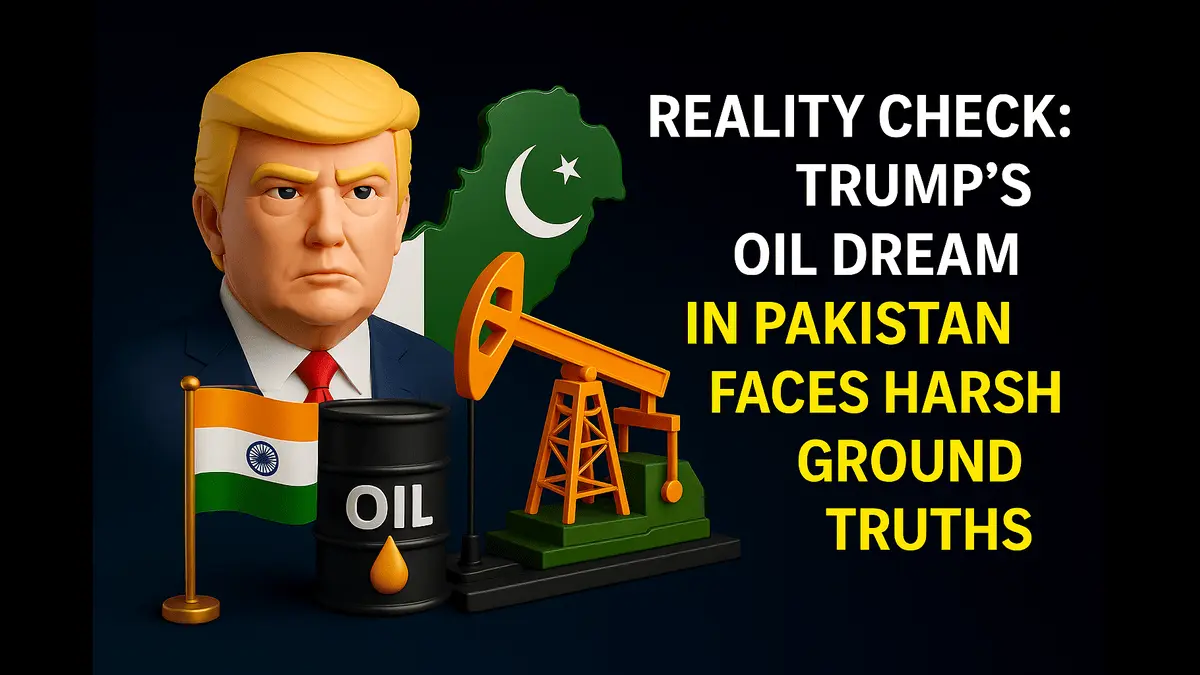
In a surprising twist to global energy politics, former U.S. President Donald Trump has announced a new partnership with Pakistan to develop what he described as the country’s “massive oil reserves.” The announcement, made via Truth Social, has stirred debate—especially as experts point to a stark mismatch between Trump’s claims and Pakistan’s actual oil potential.
“We have just concluded a Deal with the Country of Pakistan… Who knows, maybe they’ll be selling oil to India someday!” — Donald Trump
The Reality Behind the Rhetoric
Pakistan’s proven oil reserves are estimated at around 353.5 million barrels, which amounts to just 0.021% of global reserves. That places the country far behind major oil producers like the U.S. (264 billion barrels) and even neighboring India (around 5 billion barrels).
At its current consumption rate of over half a million barrels per day, Pakistan’s reserves would last less than two years without imports—a far cry from the “massive” label.
Where Is Pakistan’s Oil?
Most of Pakistan’s oil is believed to lie beneath the rugged terrain of Balochistan, a region marked by separatist unrest and security challenges. Other potential reserves are scattered across Sindh, Punjab, and Khyber Pakhtunkhwa, but exploration has been slow and largely inconclusive.
Political instability, limited infrastructure, and investor hesitancy have kept Pakistan’s energy sector from realizing its full potential.
Import Dependency and Price Pressure
Pakistan currently imports over 80% of its oil, largely from the Middle East. Petrol prices have surged to Rs 272.15 per liter, reflecting the country’s vulnerability to global market shifts.
Oil is also Pakistan’s largest import item, costing $11.3 billion in the last fiscal year. Domestic production covers only 15–20% of consumption, and refining capacity remains outdated and insufficient.
First Steps: A U.S. Crude Shipment
Despite skepticism, the deal has sparked movement. Pakistan’s largest refiner, Cnergyico, is set to import one million barrels of U.S. crude from Vitol this October. The shipment will be loaded in Houston and arrive in Karachi later in the month.
Cnergyico has indicated the chance of regular acquisitions, which could help diversify Pakistan’s oil sourcing and decrease reliance on Middle Eastern suppliers.
Expert View: Optimism vs. Ground Reality
Energy analysts remain cautious. Pakistan’s exploration success rate is low, and its refining infrastructure is aging. While offshore and shale opportunities live, most have been established as commercially unviable.
Some observers suggest Trump’s announcement may be more about political optics than economic strategy. The idea of Pakistan exporting oil to India, while provocative, seems unlikely given current geopolitical tensions.
Final Thoughts
Trump’s oil contract with Pakistan may be enterprising, but the digits—and the bottom facts—smudge a sobering sight. While the partnership could open doors for energy diversification, Pakistan’s oil sector faces significant hurdles before it can live up to the hype.
Whether this marks the beginning of a new energy chapter or simply another round of political theater remains to be seen.