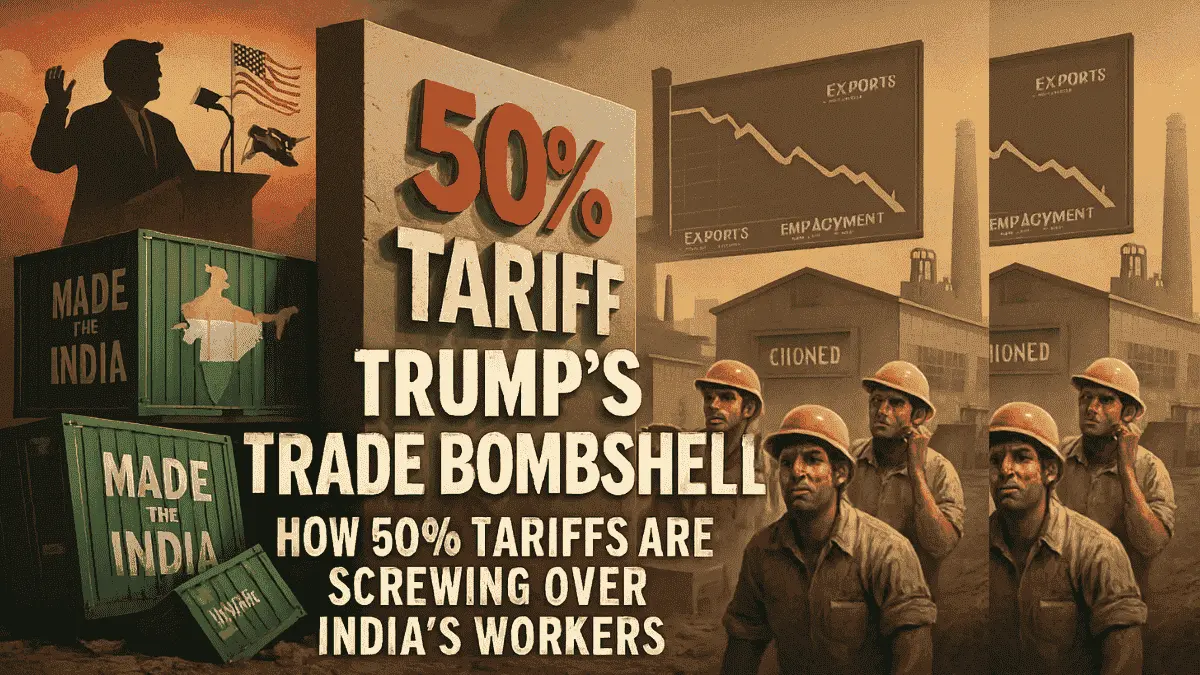

The U.S. just dropped a 50% tariff hammer on Indian goods—and the fallout is hitting real people, not just politicians. Overnight, thousands of small businesses, factory workers, and exporters are staring at disaster. This isn’t just about trade wars—it’s about jobs, families, and survival.
Textile Towns on the Brink
In Surat’s bustling textile mills, where the hum of sewing machines usually means steady paychecks, silence is spreading. “Our biggest U.S. buyer just cancelled orders,” says foreman Vijay Kumar. “If this keeps up, I’ll have to lay off half my workers by Diwali.” The same fear echoes in Ludhiana’s knitwear factories and Tirupur’s export hubs—places where entire towns depend on stitching clothes for America.
Pharma Workers: “Will We Get Paid Next Month?”
Hyderabad’s pharmaceutical labs, which supply life-saving drugs to the U.S., are now in panic mode. Technicians like Priya Reddy check their phones nervously, waiting for news. “If exports drop, our overtime pay disappears,” she says. “How do I explain to my kids that we can’t afford their school fees?”
Auto Parts Factories Stuck in Neutral
Chennai’s auto parts makers spent years meeting strict U.S. quality standards—only to get slapped with impossible price hikes. “We’re stuck with containers full of parts nobody will buy,” says factory manager Ramesh Iyer. “Do we cut wages or shut down lines? There are no good answers.”
The Oil Dilemma: “Should We Starve to Please America?”
Washington claims that by purchasing cheap Russian oil, India is “funding Putin’s war.” But ask Mumbai’s taxi drivers, and they’ll laugh bitterly. “Should I pay double for petrol just to make Trump happy?” snaps driver Rajesh Yadav. “America doesn’t care if my family eats or not.”
Collateral Damage: U.S. Businesses Suffer Too
It’s not just India feeling the pain. Chicago hardware dealer Michael Reynolds has worked with the same Indian supplier for 15 years. “Now I have to choose between raising prices or betraying a partner who’s like family,” he says. “This tariff hurts everyone—except maybe politicians in D.C.”
From “Howdy Modi” to “Why Us?”
Five years ago, Trump and Modi hugged on stage in Texas, promising a golden era of trade. Today, that friendship looks like a bad breakup. “China buys way more Russian oil, but they get no tariffs,” fumes a Delhi trade official. “We’re just the easy target.”

21 Days to Disaster—Or a Miracle?
The clock is ticking before the tariffs hit full force. Unions are protesting, diplomats are scrambling, and factory owners are praying for a last-minute deal. But for workers like Lucknow’s embroidery artisan Fatima Begum, hope is fading. “When big countries fight,” she says, threading another shawl, “people like us always lose.”
The Bottom Line: Real Lives, Not Just Numbers
This isn’t about policy debates—it’s about parents skipping meals, workers losing jobs, and families plunged into uncertainty. The U.S. might think it’s punishing Putin, but the real victims are the people who can least afford it.
🧵 Conclusion: When Tariffs Become Tragedy
The 50% tariff isn’t just a line item in a trade agreement—it’s a wrecking ball smashing through the livelihoods of millions. From the textile mills of Surat to the pharma labs of Hyderabad, the fallout is immediate, personal, and devastating. These aren’t abstract numbers on a spreadsheet—they’re families skipping meals, children pulled out of school, and workers staring down unemployment with no safety net.
While Washington may claim moral high ground in its geopolitical chess match, the pawns being sacrificed are real people. And unlike politicians, they don’t have golden parachutes or diplomatic immunity. They have rent to pay, mouths to feed, and dreams that now hang by a thread.
India’s workers aren’t asking for charity—they’re asking for fairness. For trade policies that consider humanity, not just headlines. Because when global powers play hardball, it’s always the hands that stitch, weld, and grind that bleed first.
If this tariff war continues unchecked, it won’t just reshape economies—it will rewrite destinies. And history will remember not the deals signed in boardrooms, but the silence that fell in factories, the hunger in homes, and the resilience of those who refused to be forgotten.