There is a heavy silence in the cafeterias of IT parks from Bengaluru to Pune this morning.
If you have been tracking the news or watching your portfolio, you already know the headline: The Indian IT sector layoffs in 2026 have officially accelerated, and the Nifty IT index has taken a brutal nosedive.
When you search for “AI replacing software engineers,” the internet is flooded with either techno-utopian hype or apocalyptic doom. The truth, however, is purely economic. Global clients in the US and Europe are radically changing how they build software, and the traditional Indian IT service model is struggling to keep up.
Whether you are a mid-level developer staring at an empty inbox, a fresh graduate waiting for an onboarding date that keeps getting delayed, or an investor holding legacy tech stocks, you need a strategy. Here is your comprehensive, data-backed guide to understanding the 2026 IT crash and how to future-proof your career and capital.
Table of Contents
- Interactive Tool: The AI Job Risk & Pivot Calculator
- The Catalyst: Autonomous AI Agents Explained
- The Market Impact: Why the Nifty IT Index is Crashing
- The 2026 Career Survival Protocol
- Expert Insight: The End of “Bench Strength”
- Frequently Asked Questions (FAQ)
1. Interactive Tool: The AI Job Risk & Pivot Calculator
Not sure if your specific role is in the crosshairs of the latest AI models? Use this interactive calculator. Input your current IT role and experience level to assess your automation risk and discover the exact upskilling pivots you need to make this quarter.Show me the visualisation
2. The Catalyst: Autonomous AI Agents Explained
To understand the layoffs, you have to look at what happened in Silicon Valley over the last six months.
We are no longer just dealing with chatbots that write basic code snippets. 2026 is the year of Autonomous AI Agents—systems like “Devin 2.0” and advanced internal models that can take a client’s software requirement, map the architecture, write the code, test it, and deploy it, all without human intervention.
Tasks that used to require a team of five junior developers and two QA testers working for three weeks can now be completed by one Senior AI Architect overseeing a swarm of AI agents in three days.
3. The Market Impact: Why the Nifty IT Index is Crashing
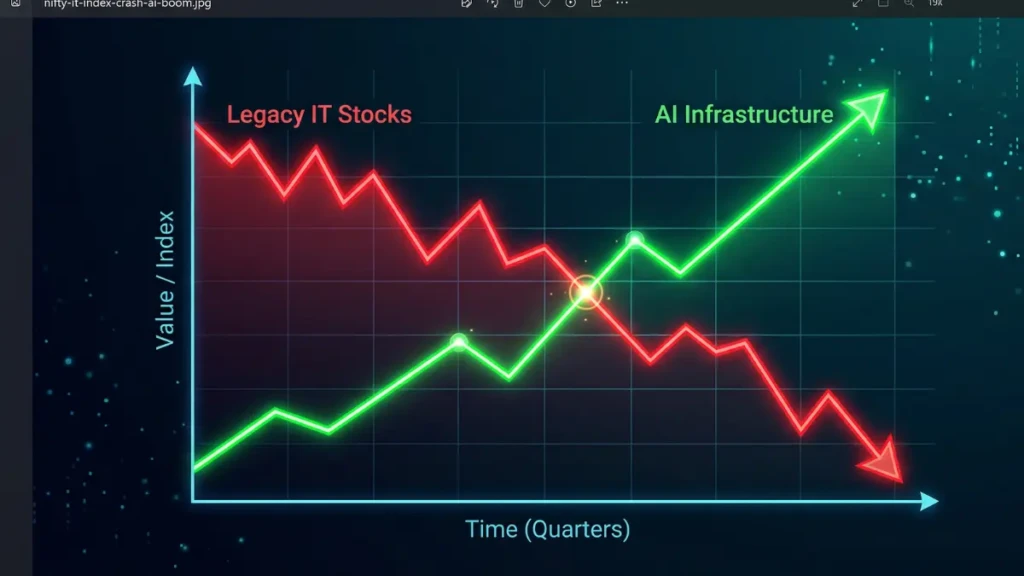
This technological leap has caused a structural crisis on Dalal Street. The Nifty IT index crash is not just a temporary dip; it is a repricing of the Indian IT business model.
Historically, giants like TCS, Infosys, and Wipro made their billions on the “time and materials” model. They billed international clients by the hour for the number of engineers working on a project.
- The Margin Squeeze: If an AI agent does the work in 10% of the time, the IT firm can only bill for 10% of the hours.
- The Client Demands: Global Fortune 500 companies are refusing to pay for large teams of human developers when they know AI can do the heavy lifting. They are demanding outcome-based pricing, which severely compresses the profit margins of traditional service providers.
- The Hiring Freeze: Because fewer humans are needed to execute projects, campus hiring has collapsed, and middle-management roles are being aggressively trimmed to protect the bottom line.
4. The 2026 Career Survival Protocol
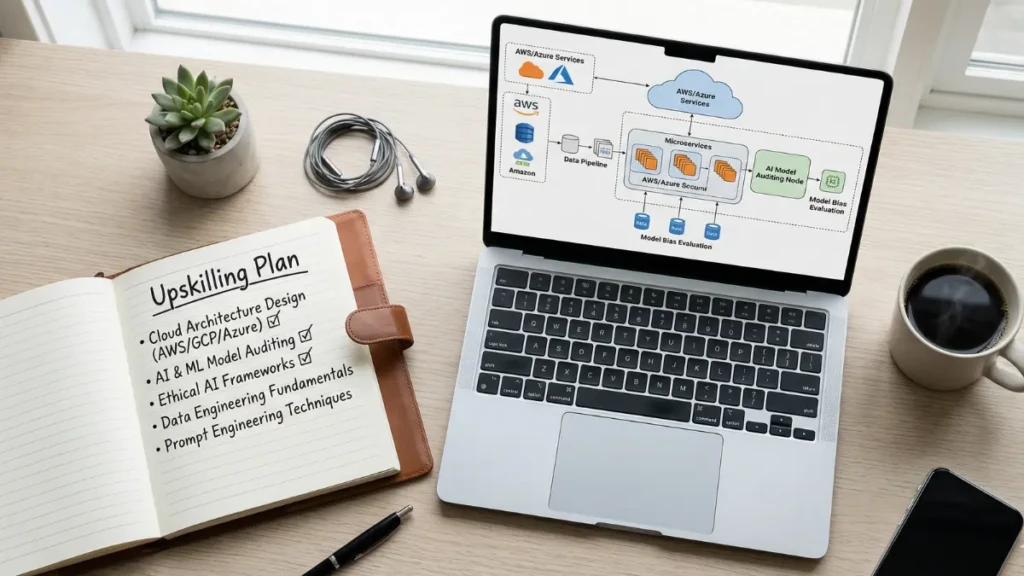
If you are working in tech today, panic is not a strategy. You must pivot from being a “code writer” to an “AI operator.”
Step 1: Escape the Danger Zones (Manual QA & Basic Front-End)
If your job relies on repetitive syntax writing or manual testing, you are at critical risk. Immediately begin upskilling into adjacent, high-value areas. QA testers should transition into AI Model Auditing (testing AI for bias, security, and hallucinations). Front-end devs must master integrating LLM APIs into user interfaces.
Step 2: Master the “Glue” (Cloud & Security)
AI is incredibly good at writing code, but it is still terrible at complex enterprise deployment. Roles involving Cloud Architecture (AWS/Azure/GCP integration), Cybersecurity, and Data Privacy are heavily insulated from automation. Companies need humans to ensure the AI doesn’t leak proprietary data or break compliance laws.
Step 3: Build Your Financial Runway
With severance packages shrinking and the job hunt taking longer in a crowded market, you need a financial buffer. Aim to have 6 to 8 months of living expenses liquid (in FDs or high-yield savings) so you can weather a layoff without being forced to take a massive pay cut in your next role.
5. Expert Insight: The End of “Bench Strength”
We spoke with Anita Rao, a veteran HR Director who has consulted for top-tier Indian IT firms.
“For two decades, Indian IT companies bragged about their ‘bench strength’—the thousands of engineers they had waiting on standby for new projects. Today, the bench is a massive financial liability. We are not just seeing layoffs; we are seeing a permanent restructuring. The future belongs to the ’10x engineer’ who uses AI to do the work of a whole department. If you are learning syntax instead of learning systems thinking, you will be left behind.”
Frequently Asked Questions (FAQ)
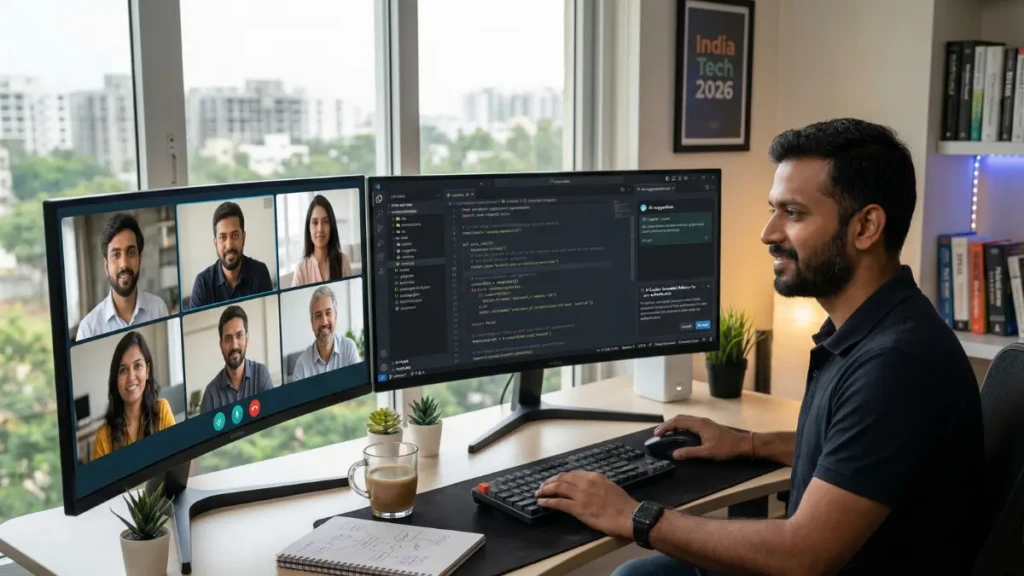
Will AI completely replace software engineers? No. AI is replacing the coding, not the engineering. Software engineering is about solving business problems, understanding user needs, and designing systems. The physical typing of code is what AI is automating.
Which tech stocks are safe during this transition? While traditional IT service companies face headwinds, the “pick and shovel” companies of the AI gold rush are thriving. Look toward companies building data centers in India, domestic semiconductor manufacturing, and specialized cybersecurity firms.
I have 2 years of experience in manual testing. What should I do today? Stop studying manual test scripts immediately. Pivot to Data Engineering or learn how to train and fine-tune open-source LLMs (Large Language Models) using Python.
Ready to Reclaim Your Career? The Indian IT sector layoffs in 2026 are frightening, but they also represent the biggest opportunity for wealth and career acceleration in a decade. The industry is resetting. By treating AI as a tool rather than an enemy, upgrading your skills from syntax to systems, and protecting your financial downside, you can make yourself irreplaceable in the new economy.
Disclaimer: This article is for informational purposes only. Career and financial markets carry inherent risks. Always conduct your own research before making major career transitions or investment decisions.
Also Read: