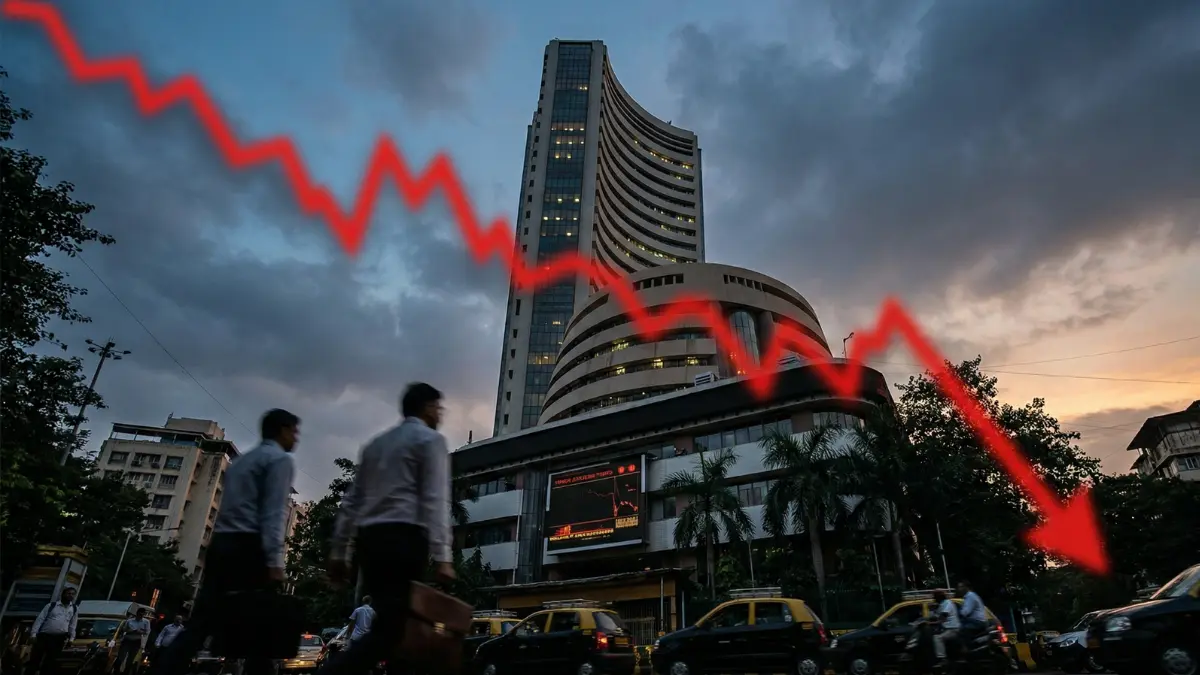
There are few things more universally panic-inducing than opening your brokerage app on a Monday morning and seeing a sea of deep red.
When you search for the “Indian stock market crash today,” you are usually bombarded with complex financial jargon, confusing acronyms, or doom-and-gloom clickbait telling you a total economic collapse is imminent.
The reality is that Dalal Street is reacting to a very specific, highly sensitive geopolitical shift. In 2026, algorithmic trading and global supply chains mean that a crisis thousands of miles away can instantly wipe out months of portfolio gains. Whether you are heavily invested in mid-caps, holding steady in mutual funds, or trading options, surviving this volatility requires a calm, root-cause approach.
Here is your comprehensive, data-backed guide to understanding today’s market crash, the US-Iran connection, and how to protect your wealth.
Table of Contents
- Interactive Tool: The Geopolitical Portfolio Hedger
- The Trigger: The US-Iran Naval Blockade Explained
- The Ripple Effect: Why Dalal Street is Bleeding
- The 2026 Crisis Portfolio Protocol
- Expert Insight: The Panic Selling Trap
- Frequently Asked Questions (FAQ)
1. Interactive Tool: The Geopolitical Portfolio Hedger
Not sure if your investments are too risky for today’s market climate? Use this interactive calculator to input your current asset allocation. It will analyze your exposure to geopolitical shocks and suggest a defensive “Crisis Mode” realignment to help you weather the storm.Show me the visualisation
2. The Trigger: The US-Iran Naval Blockade Explained

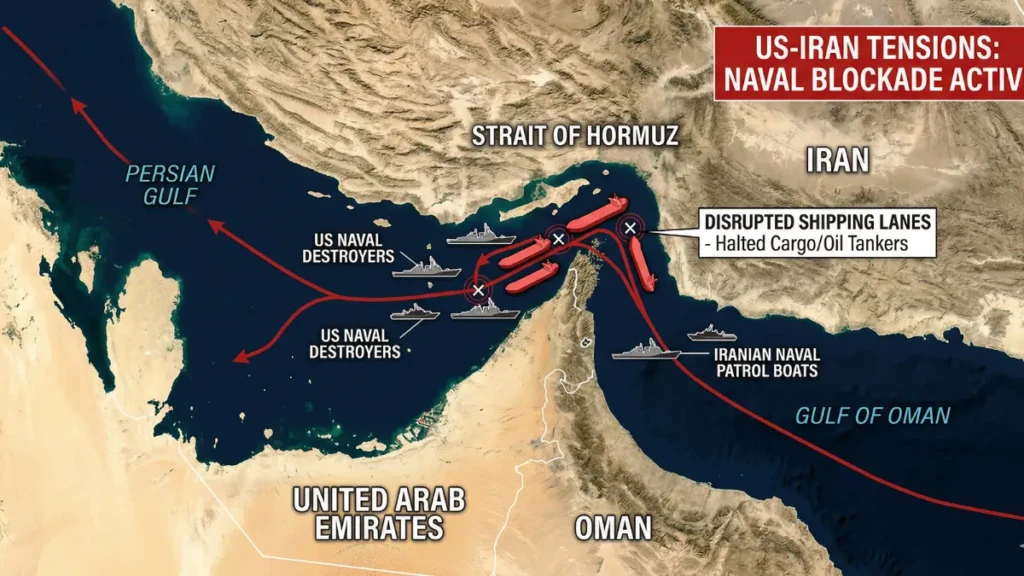
Before you can adjust your portfolio, you have to understand the macroeconomic trigger. Today’s massive sell-off stems from one localized event with massive global implications.
- The Diplomatic Collapse: Over the weekend, 21 hours of intense negotiations between the US and Iran in Islamabad officially broke down.
- The Blockade: In response, the United States enforced a naval blockade around key Iranian ports.
- The Choke Point: The immediate global concern is the Strait of Hormuz. Roughly 20% of the world’s total oil consumption passes through this narrow waterway. The blockade instantly sparked fears of a severe supply bottleneck, sending Brent crude prices skyrocketing overnight.
3. The Ripple Effect: Why Dalal Street is Bleeding
You might be wondering: What does a blockade in the Middle East have to do with my shares in an Indian tech or FMCG company? The connection is oil. India imports over 80% of its crude oil requirements. When global oil prices surge due to the Strait of Hormuz crisis, it triggers a domino effect:
- Import Bills Spike: The Indian government and corporations have to spend vastly more dollars to buy the same amount of oil.
- Inflation Looms: Higher fuel and freight costs are quickly passed down to the consumer, sparking inflation.
- Profit Margins Shrink: Companies face higher raw material and transport costs, eating into their quarterly earnings.
- FIIs Pull Out: Foreign Institutional Investors (FIIs) hate emerging market risk during oil shocks. Today, they dumped Indian equities to move their capital into safe-haven assets like US Treasuries and gold, accelerating the Sensex and Nifty drop.
4. The 2026 Crisis Portfolio Protocol
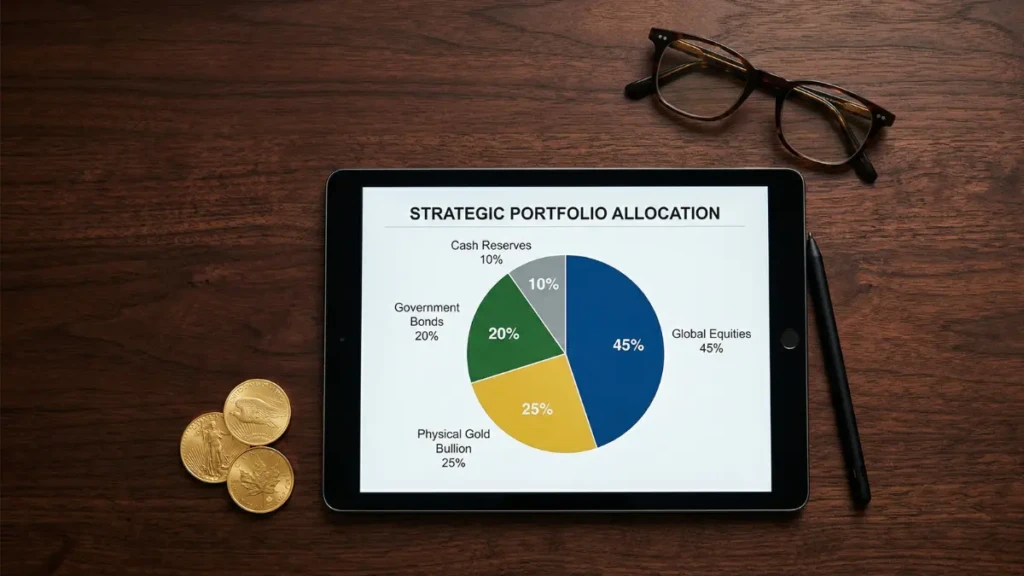
If you want to stop the bleeding and protect your capital, you must implement a strategy that hedges against prolonged oil inflation.
Step 1: The Safe Haven Pivot (Gold & Sovereign Bonds) When equities crash, gold historically shines. If you have zero exposure to precious metals, consider allocating 10% to 15% of your portfolio into Sovereign Gold Bonds (SGBs) or Gold ETFs. This acts as an anchor for your portfolio when geopolitical tensions rise.
Step 2: The Defensive Shift (FMCG & Pharma) During high inflation and market uncertainty, consumers cut back on luxury cars and vacations, but they still buy toothpaste, groceries, and medicine. Shift temporary focus away from high-beta sectors (like real estate and aggressive mid-cap tech) toward defensive sectors like FMCG and Pharmaceuticals.
Step 3: The SIP Discipline (Do Not Stop) The absolute worst thing a retail investor can do today is stop their Systematic Investment Plans (SIPs). When the market drops 1,500 points, your SIP buys more units for the exact same amount of money. This is called rupee-cost averaging, and it is the secret to building wealth during a crisis.
5. Expert Insight: The Panic Selling Trap
We spoke with Rahul Desai, a SEBI-registered investment advisor specializing in macroeconomic risk.
“The greatest wealth transfers happen during geopolitical shocks. Because retail investors assume the Indian stock market crash today is permanent, they sell their fundamentally strong stocks at a 15% loss. Meanwhile, institutional buyers are waiting to sweep up those exact same shares at a discount. Do not try to time the absolute bottom. Hold your quality companies, hedge with gold, and let the panic subside. The market always overreacts to the first 48 hours of a conflict.”
Frequently Asked Questions (FAQ)

Should I sell all my mutual funds today? No. Selling today simply locks in your losses. If you are invested in diversified mutual funds, you are already somewhat protected by the fund manager’s hedging strategies. Keep a long-term horizon (5+ years).
Will the market crash further tomorrow? Volatility will likely remain extremely high for the next two weeks. Markets price in uncertainty. Until there is a clear resolution or de-escalation regarding the US-Iran naval blockade, expect massive intraday swings on Dalal Street.
Which sectors benefit from an oil price shock? While most sectors suffer, upstream oil exploration companies (like ONGC or Oil India) often see short-term gains as the price of crude oil rises, boosting their realization per barrel.
Ready to Weather the Storm? You do not have to be a victim of algorithmic panic selling. By treating this market crash as a macroeconomic cycle rather than an apocalyptic event, you can protect your capital. Stabilize your portfolio with defensive assets, keep your SIPs running, and protect your long-term financial confidence.
If you are looking to understand how the government might react to this inflation, read our guide on [ How RBI Repo Rate Changes Impact Your Home Loan].
Disclaimer: This article is for informational and educational purposes only and does not constitute financial advice. Always consult a SEBI-registered financial advisor before making major investment decisions.
Also Read: