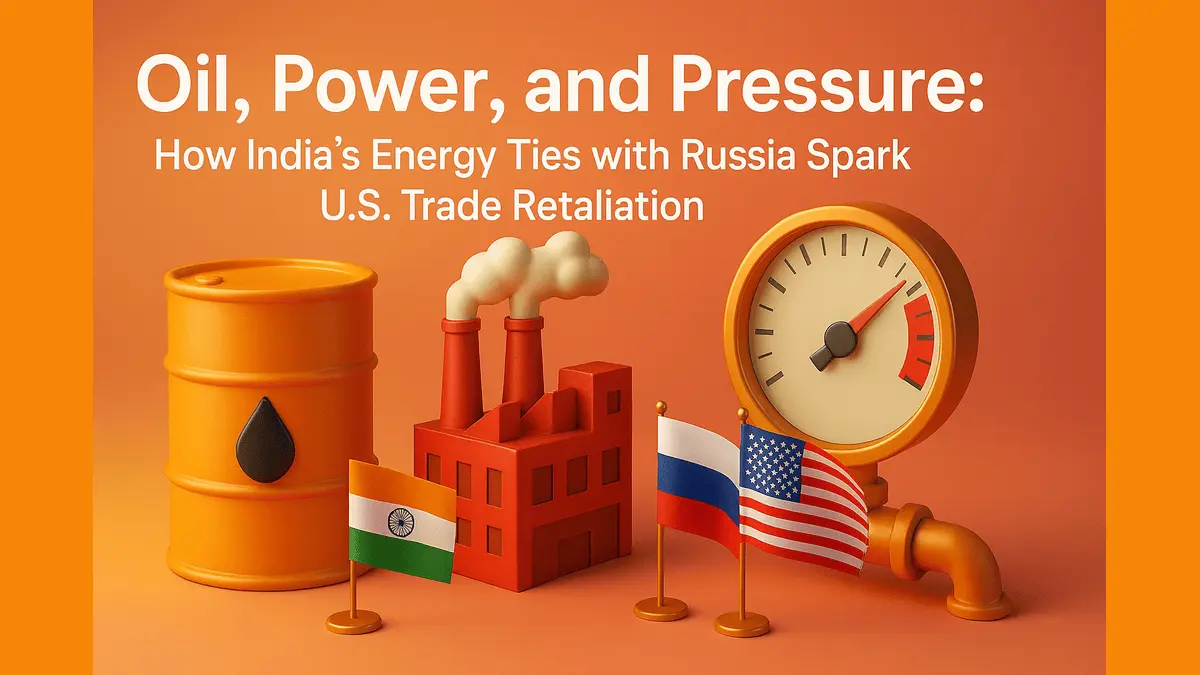

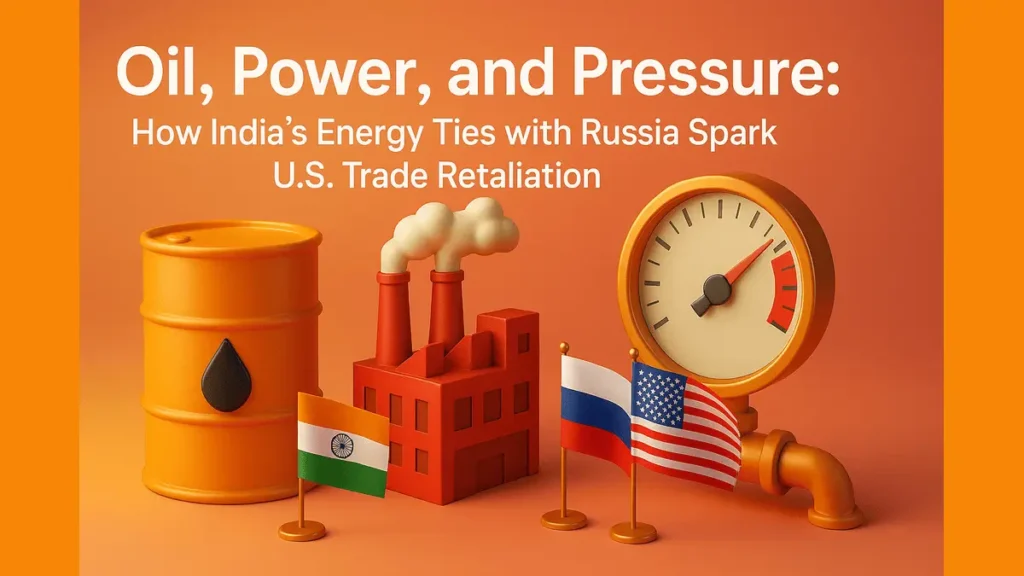
In a dramatic escalation of trade tensions, U.S. President Donald Trump has once again turned the spotlight on India, threatening to impose “very substantial” tariff hikes within 24 hours. The reason? India’s continued purchase of Russian oil—a move Trump claims is “fuelling the war machine” in Ukraine. The warning comes just days after the U.S. slapped a 25% tariff on Indian goods, along with an unspecified penalty, triggering a diplomatic standoff that could reshape global trade dynamics.
US The Tariff Ultimatum
In his interview with CNBC’s Squawk Box, Trump didn’t mince words. He claimed that India had not been a reliable trading partner. “We don’t do business with them, but they do a lot of business with us.” So we settled on 25%, but I think I’m going to raise that very substantially over the next 24 hours, because they’re buying Russian oil.”
Trump’s frustration stems from what he perceives as India’s high tariff barriers and its strategic energy ties with Moscow. Despite India offering “zero tariffs” on U.S. goods in recent trade talks, Trump dismissed the gesture as inadequate, citing India’s oil purchases as a geopolitical liability.
🛢️ India’s Energy Equation
With an estimated daily import of 1.75 million barrels of seaborne Russian crude between January and June 2025, India, the third-largest oil importer in the world, has become the largest purchaser of this commodity. While this marks a modest 1% increase from the previous year, the July figures show a notable dip—1.6 million barrels per day, down 24% from June and 23.5% from July 2024.
Indian officials argue that these imports are essential for maintaining price stability in global energy markets. “If we stop buying Russian oil, who will replace those barrels to maintain balance and prevent prices from shooting up?”The 2022 oil price pinpoint, which sent expenses rocketing to $137 per barrel, was mentioned by a government official.
🧭 Strategic Autonomy vs. Global Pressure
India’s stance has been consistent: its energy policy is driven by national interest, not external pressure. The Ministry of External Affairs responded sharply to Trump’s threats, stating, “It is unjustified to single out India.” The ministry also pointed out that Western nations—including the U.S. and EU—continue to trade with Russia despite their public condemnation of Moscow’s actions in Ukraine.
Record imports of 16.5 million metric tons of liquefied natural gas were part of the €67.5 billion in trade between the EU and Russia in 2024.
📉 Trade Deficit and Economic Stakes
The U.S.-India trade relationship is substantial. Trump’s tariff hike threatens to disrupt this balance. Indian exports—ranging from pharmaceuticals and textiles to electronics and auto parts—could face steep price increases in the U.S. market, potentially hurting Indian manufacturers and American consumers alike.
🧨 Political Rhetoric and Global Reactions
Trump’s rhetoric has been incendiary. When he said, “They’re fueling the fighting engine,” he was alluding to India’s oil trade with Russia. And I won’t be pleased if they do that. His comments have sparked concern among trade analysts and diplomats, who warn that punitive tariffs could derail ongoing negotiations for a bilateral trade agreement.
India’s Foreign Ministry has called out the hypocrisy of Western nations, noting that many of them continue to engage in trade with Russia. According to the ministry, “it is revealing that the very nations criticising India are themselves engaging in trade with Russia.”
🧪 The Geopolitical Undercurrent
At the heart of the dispute lies a broader geopolitical tension. India’s strategic independence—its power to make liberated judgments on foreign approach and employment—is being tested. While New Delhi has deep-rooted ties with Russia, it also values its growing partnership with the U.S., especially in defence, technology, and investment.
Trump’s tariff threats could be seen as a pressure tactic to force India into alignment with Western sanctions against Russia. But India has made it clear that its decisions are guided by economic necessity and sovereign interest.
🧭 Navigating the Diplomatic Crossroads
The timing of Trump’s announcement is critical. India and the U.S. are currently engaged in trade negotiations, with a team from Washington expected to visit New Delhi later this month. The goal is to finalise a comprehensive bilateral trade agreement by fall 2025.
However, Trump’s aggressive stance could complicate these talks. Indian officials are reportedly holding back on fresh offers, especially in sensitive sectors like agriculture and dairy, where U.S. demands for market access have met resistance.
🧮 What’s at Stake?
There could be serious economic repercussions if Trump fulfils his threat, including Indian exporters losing their ability to compete in the US market.
- American consumers could face higher prices on essential goods like generic medicines, textiles, and electronics.
- Diplomatic relations between the two nations could sour, affecting cooperation on defence, climate, and technology.
🕊️ The Road Ahead
Despite the tension, there’s still room for diplomacy. Trade experts believe that Trump’s tariff threats may be a negotiating tactic rather than a final decision. For its part, India is still dedicated to a trade deal that is “fair, balanced, and mutually beneficial.”
All eyes are on Washington and New Delhi as Trump’s 24-hour ultimatum draws to a close. Is a full-scale trade war on the horizon, or will cooler heads win out?