Social media trends move fast. One moment everyone is admiring beautiful vintage saree portraits, the next someone is asking: “How did AI know that about me?” That’s what’s happening now with Google Gemini’s “Nano Banana” AI tool and its Bollywood-retro saree edit craze. What started as fun has left some users spooked.
What is this Trend?
The Gemini Nano Banana model is Google’s tool (also known as Gemini 2.5 Flash Image) that lets people convert their selfies or photos into stylized, heavily edited portraits. The edits often mimic old-Bollywood glamour: sarees, flowy drapes, warm golden lighting, cinematic backdrops.
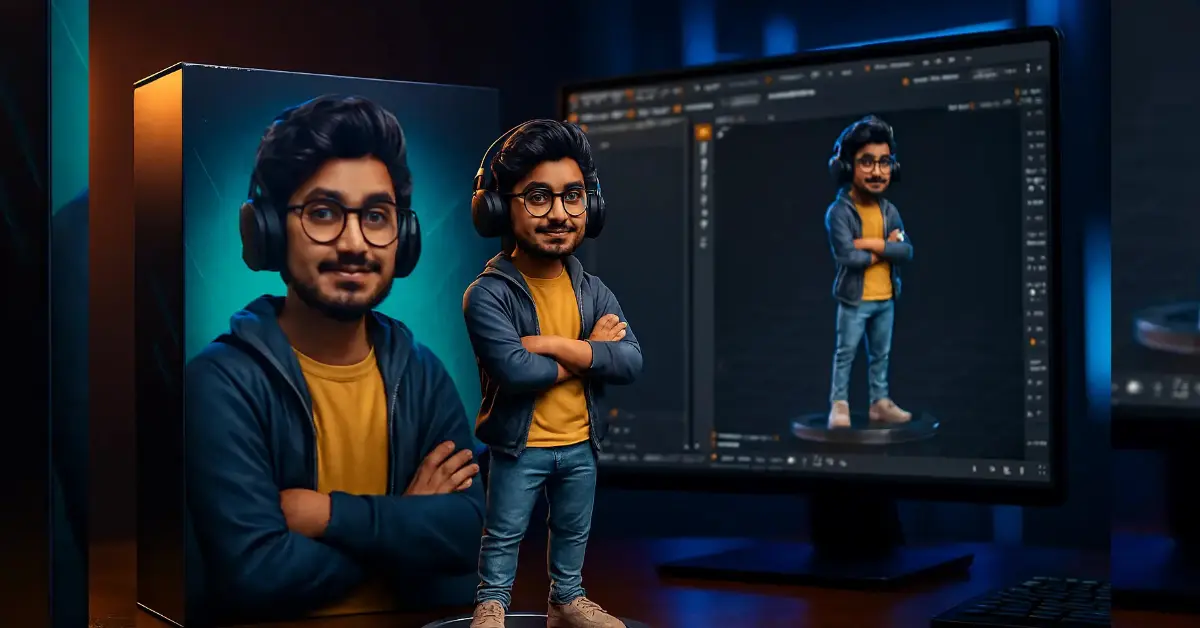
At first the trend was about turning images into 3D figurines or toy-like avatars. But lately the saree version has caught on massively on Instagram. Users upload their normal photo, write a prompt like “vintage saree look, retro film poster vibe,” and Gemini transforms the image.
The Creepy Detail: A Mole That Weren’t Visible
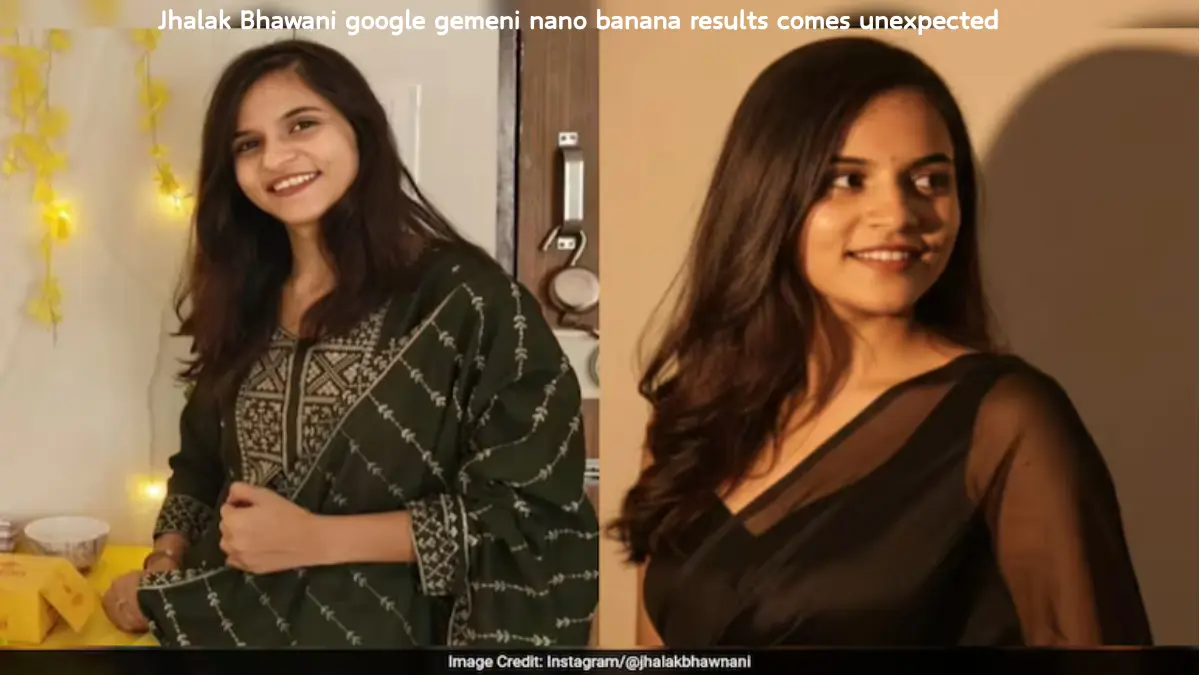
The concern started when an Instagram user (going by Jhalak Bhawnani) posted a video explaining she tried this trend. She uploaded a photo of herself wearing a full-sleeve outfit so her arms were covered. Then she used Gemini Nano Banana with the saree edit prompt.
In the AI-edited version, her saree portrait image showed a mole on her left arm. That mole is real. She has it in real life. But in the original photo she uploaded, the mole was not visible (because sleeves covered it). That surprised her. She said, “How did Gemini know I have a mole in this part of my body? It’s very scary, very creepy…”
Because of that one detail many users started wondering: is AI drawing from more than just the photo we give it?
What People Are Saying
Reactions have been mixed. Some believe this is a coincidence or quirk of AI inference. Others suspect the AI has access to more data about users than they expected — perhaps past photos, metadata, or social media posts.
A few comments echo:
- “This happened to me too. My tattoos which are not visible in my photos were also visible.”
- “Everything is connected. Gemini belongs to Google and they go through your photos and videos to develop the AI pic.”
Some are warning: watch what you upload, be careful with your private photos. Some say the video may be for attention, but the fears feel real.

What Does Gemini Nano Banana Claim?
Google has built in some safety and detection mechanisms:
- All images created or edited via Gemini carry an invisible watermark called SynthID. This watermark is meant to mark images as AI-generated.
- Also metadata tags may be used to identify and trace edits.
Google says uploads are not permanently stored, and permissions are required for app features. But many users don’t have tools or expertise to verify watermarking or to see how metadata may be used.
The Bigger Privacy Concern
The mole story highlights a bigger issue: how much data about us is floating online, and how AI can “learn” or infer details that we thought were private. Some of those details might come from:
- Previously uploaded photos (even ones we forgot about),
- Social media content (stories, tagged pictures, archived stuff),
- Device metadata (location, device type, time stamps),
- Maybe even data shared with cloud services or Google Photos etc.
When AI has lots of such inputs, even if a particular photo doesn’t show something, the model may infer it — whether through associations or patterns. That makes a lot of people uneasy.
Official Warnings and Advice
Some authorities are now telling people: join trends, but do so with eyes open.
- An IPS officer (VC Sajjanar) warned users to beware: fake apps or sites may steal data. Uploading photos, personal identifiers may lead to misuse.
- Cybersecurity experts say watermarking is good, but it’s not enough. You need to combine it with safe practices.In short: the tech is impressive and fun, but the flip side demands caution.
How to Stay Safer If You Try the Trend
If you want to try the saree edit or any Nano Banana style AI edit, here are some pointers to reduce risk. Think of them as precautionary steps rather than paranoia:
- Use official apps only. Don’t download from shady sources. Stick to Google Gemini or Google AI Studio.
- Remove metadata from your photo. Location, device data, time stamps — strip them if possible. Many photo editors or phone settings allow removing metadata.
- Avoid uploading photos that are overly revealing or that hide certain parts of your body because you don’t want them seen. If something is hidden in your photo, don’t assume AI can’t infer it.
- Review privacy policies. Know what the app is allowed to do with your image (does it store it, use it for training models?).
- Don’t make all photos public. Keep them in private folder or share only with trusted friends. Public exposure increases risk.
- Save original copies. If something happens, having originals helps you track what changed.
- Reduce resolution or share smaller versions when posting online. Makes it harder for bad actors to misuse your photo in high quality.
Why This Matters
Technology moves fast. AI image editing tools are getting more powerful every day. What once was obvious fakery is now subtle. That has big implications for trust, privacy, identity. Some reasons this is more than just a meme:
- Personal identity: People don’t want machines guessing or showing things only they know about their bodies.
- Privacy & consent: If AI uses past photos or data without clearly telling you, that breaks trust.
- Deepfake potential: The more detail AI can infer, the more realistic malicious fake images could become.
- Mental health: People could feel exposed, manipulated, vulnerable.
This mole incident is a wake-up call: digital footprint is wider than we think.
Final Thoughts
The Gemini Nano Banana saree edit trend is fun, eye-catching, and clearly made to sparkle. Retro lighting, vintage saree, cinematic vibes — it’s made for liking and sharing. But for some, that sparkle came with an edge of discomfort when something very personal showed up without being visible in the original.
Jhalak Bhawnani’s video caused many to stop and think. Maybe we should treat image-editing AI tools like fire: useful, beautiful, but risky if handled carelessly.
If you decide to try the trend, go ahead — people love creativity. But stay aware. What you see may not always come just from what you showed. Sometimes AI knows more than we realize.
Also Read:
21+ Nano Banana Prompts to Turn Any Image Into a 3D Model with Google AI Studio